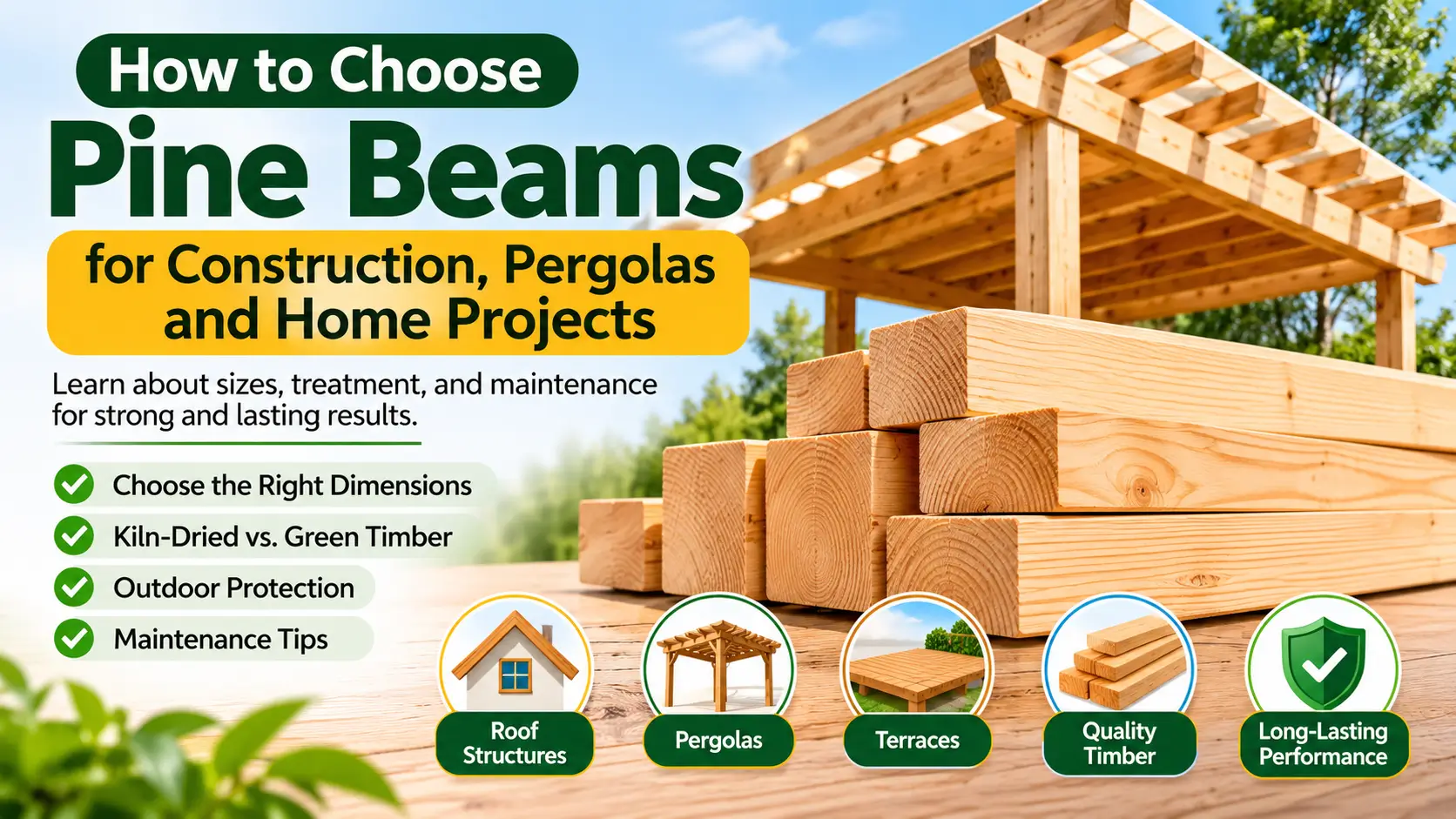
Pine beams are a versatile timber option for residential construction, pergolas, terraces and other architectural projects. Their practical workability, availability in different dimensions and compatibility with various finishes make them useful for both traditional and contemporary designs. However, choosing the right beam involves more than selecting a piece of wood that looks suitable. Moisture content, dimensions, treatment, intended use and installation conditions all matter.
Whether you are planning a timber roof, an outdoor pergola or a home renovation, understanding these factors can help you make a more informed material choice.
What Are Pine Beams Used For?
Pine beams are solid timber components used in a range of construction and design applications. Depending on their dimensions, grade, treatment and structural suitability, they can serve different purposes.
Common applications include:
- Roof structures: Supporting appropriately engineered roof assemblies and timber frameworks.
- Pergolas: Creating the main horizontal and vertical elements of outdoor shade structures.
- Terraces: Supporting suitable timber features and architectural elements.
- Residential construction: Forming part of timber-framed structures and decorative architectural details.
- Interior projects: Adding exposed timber features, rustic finishes and visual character.
The correct specification depends on the intended load, span, environmental conditions and applicable building requirements. A qualified professional should determine whether a particular beam is suitable for a structural application.
Kiln-Dried Pine Beams vs. Green Timber
One important consideration when buying timber is its moisture content.
Green timber contains more moisture and can change dimension as it dries. This movement may contribute to shrinkage, twisting, warping and cracking after installation.
Kiln-dried timber is placed in a controlled drying environment to reduce its moisture content before use. This process generally improves dimensional stability compared with freshly cut, undried timber.
Why Does Kiln Drying Matter?
Kiln drying can offer several practical advantages:
- Improved dimensional stability: Properly dried timber generally experiences less moisture-related movement after installation.
- More predictable finishing: Dry surfaces can be easier to prepare for compatible sealers, stains and coatings.
- Reduced drying-related movement: Controlled drying helps reduce the risk of excessive shrinkage and distortion.
- Better material preparation: It provides a more consistent starting point for construction and woodworking.
Kiln drying does not make timber immune to moisture. Pine beams can still absorb water, expand, contract or deteriorate if they are poorly stored or exposed to unsuitable conditions.
How to Choose the Right Pine Beam Dimensions
Beam dimensions should be selected according to the design and engineering requirements of the project.
Timber suppliers may offer standard commercial sections as well as custom dimensions. For example, available pine beam sizes can include 4 × 8, 4 × 10, 4 × 12, 6 × 8, 6 × 10 and 6 × 12 inches.
However, these dimensions should not be treated as interchangeable options. A larger beam is not automatically suitable for every project, and visual thickness alone does not establish its load-bearing capacity.
Before ordering, consider:
- Span: How far must the beam extend between its supports?
- Expected load: What weight will the structure need to support?
- Spacing: How frequently will the beams or supporting members be installed?
- Environmental exposure: Will the timber remain indoors, outdoors or in contact with moisture?
- Connection details: What fasteners, brackets and support arrangements will the design require?
For load-bearing applications, have the dimensions and timber specification checked by a qualified structural professional.
Should You Use Treated Pine Beams Outdoors?
Outdoor timber faces different challenges from timber used inside a dry building. Rain, sunlight, humidity, insects and fungal activity can affect its service life.
For certain exterior applications, pressure-treated timber may be worth considering.
One treatment option used for timber is CCA, which stands for chromated copper arsenate. It is a wood preservative treatment designed to help protect suitable timber against wood-destroying organisms. Its use is subject to applicable regulations and product specifications.
When selecting treated pine, check:
- Whether the treatment is suitable for the intended exposure.
- The treatment specification and supporting documentation.
- Any restrictions on residential or particular applications.
- Required handling, cutting and disposal precautions.
- Whether additional surface protection is recommended.
Do not assume every treated product is appropriate for every outdoor or residential use. Follow the supplier’s documentation and local regulations.
Choosing Timber for Pergolas and Terraces
Pergolas and terraces combine practical construction requirements with appearance. The timber needs to suit the design, the local climate and the maintenance expectations of the property owner.
A few considerations can make the selection process easier.
1. Consider the Local Climate
Frequent rainfall, high humidity and intense sunlight can increase maintenance requirements. Choose a timber specification appropriate for the actual exposure conditions.
2. Plan the Finish
Depending on the project, pine can be prepared for staining, painting or compatible protective coatings. Always check that the selected finish is suitable for the treatment and moisture condition of the timber.
3. Protect Exposed Surfaces
Exterior timber benefits from appropriate protection. Seal exposed surfaces as recommended, maintain suitable drainage and prevent water from collecting around connections and support points.
4. Use Suitable Hardware
Fasteners and connectors should be compatible with the timber treatment and environmental exposure. Incorrect hardware can corrode or create weak connections.
How to Maintain Pine Beams After Installation
Maintenance helps preserve the appearance and condition of timber structures.
A practical inspection routine should include:
- Checking for cracks, excessive movement and visible deterioration.
- Inspecting connections, brackets and fasteners.
- Looking for water accumulation around beam ends and supports.
- Maintaining protective coatings according to the manufacturer’s instructions.
- Checking exposed timber after severe weather.
- Keeping drainage and ventilation paths clear.
If a beam shows significant structural damage, have it assessed rather than relying on surface repairs.
Where Can You Find Pine Beams for a Construction Project?
When comparing suppliers, look beyond the advertised dimensions. Ask about the timber’s moisture condition, available lengths, treatment options, customization, documentation and delivery arrangements.
For example, Madereria Cuauhnahuac offers kiln-dried pine beams in commercial and custom dimensions for construction and architectural applications. Its product information also describes an optional CCA treatment for exterior projects.
Comparing the available specifications with your project’s requirements can help you determine whether the product is appropriate before requesting a quotation.
Frequently Asked Questions
Are kiln-dried pine beams better than green pine beams?
Kiln-dried pine beams generally offer improved dimensional stability because their moisture content has been reduced through controlled drying. Green timber can experience more shrinkage and movement as it dries after installation.
Can pine beams be used for pergolas?
Yes, pine beams can be used in pergola construction when their dimensions, grade, treatment and structural suitability match the design requirements.
Do outdoor pine beams need treatment?
The appropriate protection depends on exposure, local climate, timber specification and the intended service conditions. Some projects may require pressure-treated timber, while others may use suitable surface protection.
Can pine beams be ordered in custom dimensions?
Some timber suppliers offer custom dimensions and lengths. Confirm the available specifications, lead times and minimum order requirements directly with the supplier.
How do I know which beam size my project needs?
Beam sizing depends on span, load, spacing, timber properties and connection details. A structural engineer or other qualified professional should determine the correct specification for load-bearing applications.
Final Thoughts
Choosing pine beams requires attention to more than price and appearance. Moisture condition, dimensions, treatment, environmental exposure and installation details all influence how timber performs in a project.
By comparing supplier specifications and obtaining appropriate technical advice, homeowners, builders and contractors can make more informed decisions about using pine beams in roofs, pergolas, terraces and other construction projects.